
UK Fire Safety & Risk Assessment for Therapy Rooms (2026 Guide)
Fire safety is the one part of premises law that can close your therapy room, land you with a fine, or put a client at risk. It covers every rented treatment room in the UK, however small, and the law does not care if you own the room or hire it by the hour. Here is the good news. The law is proportionate. A single-room practice needs a proper fire risk assessment and a few sensible precautions, not a facilities department.
What follows covers the law as it stands in 2026: who is legally responsible when rooms are rented out, how to do the five-step fire risk assessment, and what equipment you need and what it costs. We leave the insurance and premises questions to our other guides.
The law: the Regulatory Reform (Fire Safety) Order 2005
The Regulatory Reform (Fire Safety) Order 2005 (the RRO) is the main fire safety law for non-domestic premises in England and Wales. It abolished fire certificates and put the duty on whoever controls premises to manage fire safety themselves. Scotland has its own equivalent in the Fire (Scotland) Act 2005, and Northern Ireland has its own regulations. The principles are the same across the UK.
The Order applies to every commercial building, including a single therapy room in a converted house. There is no exemption for small businesses. The Fire Safety Act 2021 extended the responsible person’s duties to the structure and external walls of buildings containing two or more domestic premises, which matters mainly if your room sits in a converted residential block.
Two Articles matter most. Article 8 requires the responsible person to take general fire precautions so far as reasonably practicable; Article 9 requires a fire risk assessment. Enforcement sits with your local fire and rescue authority. It can issue prohibition notices that close premises immediately, and it can prosecute the most serious offences with fines and up to two years’ imprisonment.
Who is the responsible person in a rented therapy room?
In a building where rooms are rented to self-employed practitioners, the responsible person is whoever has control of the premises. That is usually the building owner or clinic manager who lets the rooms. They hold the duty for the building as a whole: common areas, escape routes, shared alarms, emergency lighting and the building’s fire risk assessment.
But the Order does not stop there. Anyone with control of premises "to any extent" has duties, and Article 22 requires everyone to cooperate and coordinate. In practice it splits like this:
- The room owner carries out the building’s fire risk assessment, maintains shared fire safety equipment, keeps common escape routes clear and tells practitioners the fire procedures.
- Each practitioner is responsible for their own conduct in the room: not blocking exits, not bringing in unsafe equipment, reporting faults, following the evacuation plan.
- Both sides must share information: if you change your layout or bring in a big new electrical item, tell the person running the building.
If you are the self-employed practitioner, you are not the responsible person for the building. You can still be prosecuted if your own negligence endangers clients. Fire law has no patience for "I was only renting the room for an hour."
The five-step fire risk assessment
Article 9 requires a fire risk assessment, and the government’s five-step checklist is the version everyone works from:
- Identify fire hazards: ignition (heaters, electrical equipment, wax warmers), fuel (paper, towels, oils, soft furnishings) and oxygen.
- Identify people at risk: you, clients, other practitioners, anyone less mobile.
- Evaluate, remove or reduce the risks and protect people.
- Record findings, prepare an emergency plan, and inform and train people.
- Review regularly and update when things change.
For a small single-room practice you can do this yourself using the government’s guide for small and medium places of assembly. You need no paid consultant. If the building is large or complex, pay a fire risk assessor and check they hold a recognised qualification, such as the Institution of Fire Engineers’.
Do you have to write it down? Only if you employ five or more people, hold a licence or registration, or an enforcement notice requires it. Write it down anyway. Insurers ask for a copy, and it is your evidence that you met the "reasonably practicable" test.
The law sets no fixed review interval. Convention: review at least annually, plus a fresh assessment after any change. A new layout, new equipment, more practitioners, or any fire, near-miss or enforcement visit all count.
Fire alarms, emergency lighting and extinguishers
The basics for a small therapy room:
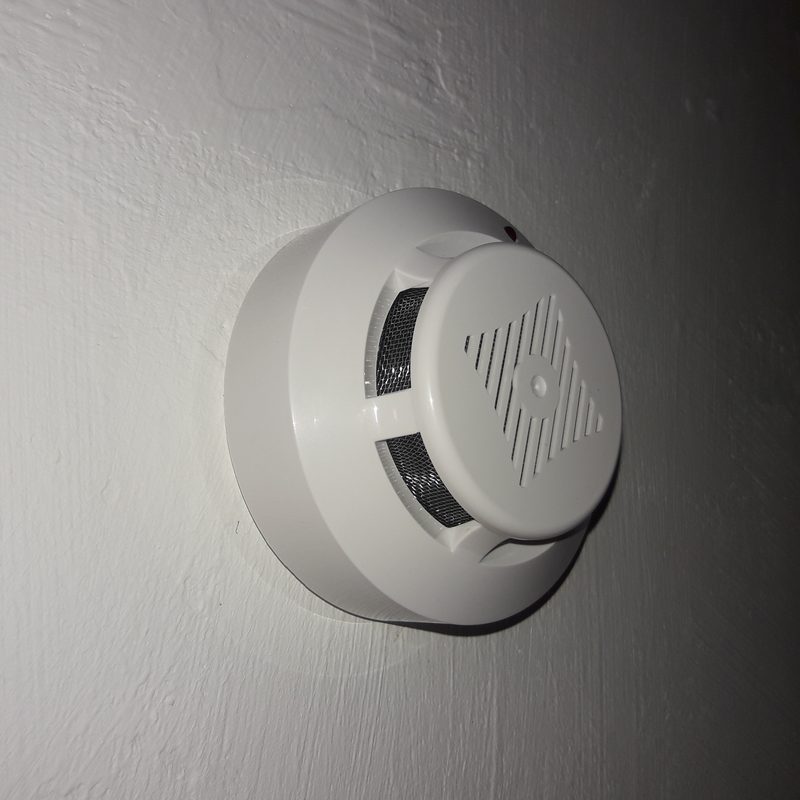
- Smoke and heat detection. In a shared building this is usually a managed system covering the whole premises; in a single room, a mains-powered interlinked alarm. Test weekly, to the BS 5839 benchmark for workplaces, and log it. Service by an engineer at least annually.
- Emergency lighting. Needed where a power cut would leave an escape route in darkness: corridors, stairs, windowless rooms. BS 5266 recommends a monthly functional test and an annual full-duration test. Small daylit ground-floor rooms often need none; your assessment decides.
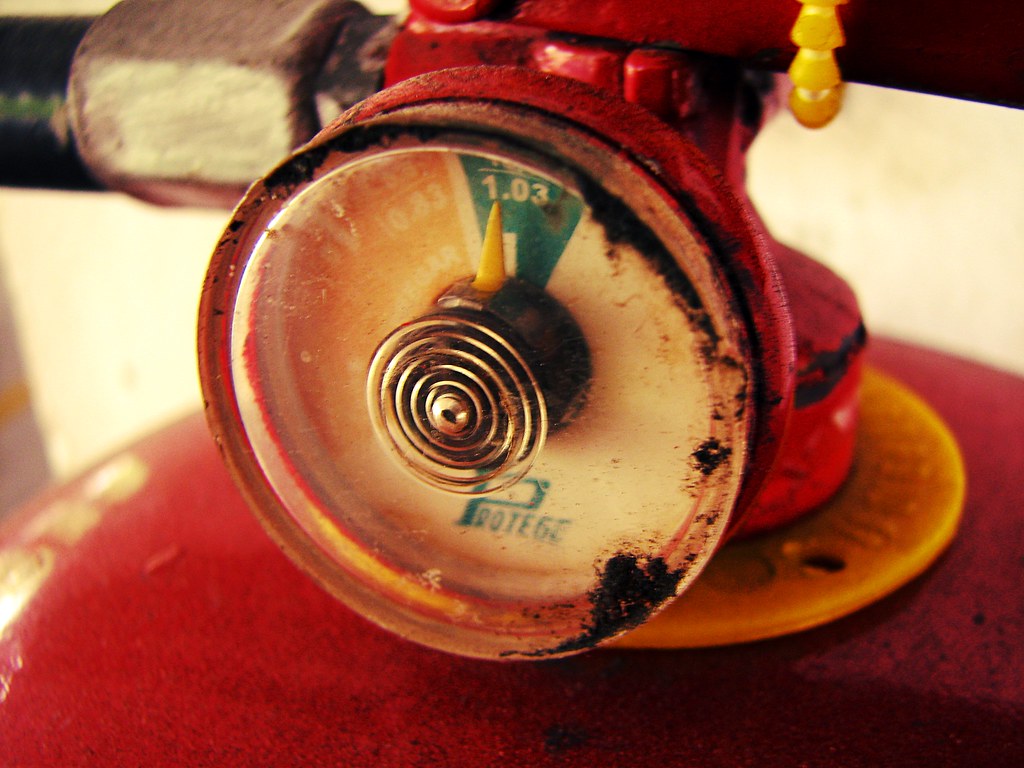
- Extinguishers. Never use water on electrical equipment. For a therapy room, choose a 2kg CO2 extinguisher near electrical equipment plus a foam extinguisher for general combustibles, and a fire blanket where you heat oils or make drinks. Powder works on everything but makes a terrible mess indoors. Service extinguishers annually by a competent person, and after any use. BAFE-registered companies are the benchmark.
Massage oils are fuel. Keep oil stock away from heaters, radiators and wax warmers, and never leave an oil warmer running unattended.
PAT testing: what the law actually requires
There is no law requiring every appliance to be formally PAT tested every year. The Electricity at Work Regulations 1989 require electrical equipment to be maintained so as to prevent danger, and the HSE’s guidance is clear that formal testing is one tool, not a blanket duty. The level of checking should reflect risk, which is higher for hand-held equipment used by the public.
In a therapy room that means routine visual checks of every plug, cable and appliance (damaged leads, loose plugs, scorching) plus formal testing for equipment clients touch: massage equipment, heated couches, TENS machines and fans, typically every one to two years. The kettle and the water boiler sit in between. Visual checks plus occasional testing.
The practical reason to take it seriously is insurers and room owners. Landlords routinely ask for a PAT certificate or signed declaration as a licence condition, and your own policy may require it. Skip the argument. A dozen appliances costs well under £100. We cover how insurers treat this in our guide to insuring your therapy room rental.
Escape routes, fire doors and everyday hazards
Practical basics that make the assessment real:
- Keep escape routes clear at all times. Coats, bags and stacked chairs in corridors are the most common enforcement finding in small premises.
- Doors on escape routes must open easily and must not be locked or bolted while the building is in use. Security doors need a push-bar that releases without a key.
- Fire doors, where fitted, must be self-closing, fitted with intumescent strips and smoke seals, and never wedged open.
- Green running-man exit signs are needed where the route is not obvious; most small rooms with a direct exit need minimal signage.
- Treatment-room hazards: candles and incense (never leave burning), electric blankets and heated couches (check leads, don’t fold them hot), oil warmers, clients who use oxygen. Each earns a line in your assessment.
In a shared building, the corridor and shared exit are the owner’s responsibility, but they are your escape route too. If you spot a blocked exit, report it in writing and keep a copy. That is both good practice and your protection.
Landlord vs practitioner: who does what
When rooms are let by the hour or the month, responsibilities split like this:
Building owner or clinic manager (responsible person):
- Fire risk assessment for the building and shared areas
- Shared alarm, emergency lighting and extinguishers maintained and serviced
- Escape routes and fire doors in common parts
- Telling practitioners the fire procedures and evacuation plan
- Coordinating with other dutyholders (Article 22)
Practitioner renting the room:
- Keeping their own room clear and safe
- Daily and weekly checks of equipment they bring in
- PAT testing or signed declarations for their own appliances
- Reporting faults and hazards promptly
- Not increasing risk: no unauthorised heaters, no wedged fire doors, no blocked exits
- Knowing the evacuation plan and how to raise the alarm
None of this should be informal. A written room rental agreement stating who is responsible for what (fire safety duties, who pays for servicing, who to report faults to) saves hours of argument, and our checklist for renting a therapy room covers what to inspect before you sign.
Records and training for small premises
Small premises need a paper trail, not a safety department:
- A written, dated fire risk assessment, even where not strictly required
- A log of weekly alarm tests and monthly emergency lighting checks
- Annual service certificates for the alarm and extinguishers
- PAT records or declarations for appliances
- A short fire procedure: what to do on discovering a fire, how to raise the alarm, the escape route and assembly point
- Training: employees need fire safety induction, and the law requires you to inform and instruct them; keep a one-line record. Solo practitioners should rehearse the evacuation, including how you would get a less mobile client out.
Your professional body’s expectations align with the law. [BACP’s public protection expectations](https://www.bacp.co.uk/about-us/protecting-the-public/) include practising from premises that meet health and safety requirements, and your professional indemnity insurer will want evidence of reasonable care. The same records satisfy both.
What fire safety costs in 2026
Estimates, not quotes. Prices vary by region, so get three quotes before spending:
- New fire extinguisher: £30–£70, depending on type and size
- Annual extinguisher service: £15–£40 per unit, plus a £50–£100 callout
- Fire alarm: £150–£500 installed for a simple system; £100–£250 a year maintenance
- Emergency lighting annual test: usually bundled with the alarm service; £50–£150 if separate
- PAT testing: £1–£3 per appliance with a minimum callout (10–15 appliances, £60–£120)
- Consultant fire risk assessment: £250–£600 for small premises (you can do it free with the government’s five-step checklist)
Against that, getting it wrong costs: a prohibition notice closes the room until fixed, an enforcement notice carries a fine, and an injured client means insurance is the least of your problems. Our therapy room cost calculator shows what a room should cost in your city, and fire safety spend is part of that picture.
Fire safety checklist for your therapy room
Run through this quarterly, and after any change to the room or building:
- Fire risk assessment completed and reviewed within the last 12 months, written down and dated
- Smoke or heat alarm tested this week, test logged
- Alarm and extinguishers serviced within the last 12 months
- Extinguishers present, in date, right type: CO2 or foam, never water, near electrics
- Escape route clear from the far corner of the room to the final exit
- Exit doors open without a key, not wedged or propped
- Fire doors self-close properly
- Electrical appliances visually checked; PAT up to date
- Massage oils and flammables stored away from heaters and oil warmers
- Fire procedure and assembly point known to everyone who uses the room
- Faults reported to the building owner in writing
Start this week. If you rent, ask to see the building’s fire risk assessment and check your licence states who is responsible for fire safety before you sign. The full walkthrough is in our checklist for renting a therapy room. If you let rooms, make the assessment part of your letting pack and keep servicing certificates where practitioners can see them. Then run the five-step assessment, test the alarm and book the servicing. None of it is difficult. Fire safety for a therapy room is one afternoon of assessment, a few hundred pounds of equipment and servicing, and a habit of weekly checks. That is the difference between a room that is a pleasure to work in and one that is a liability waiting for an incident. Browse therapy rooms to rent in London or search your city, and make fire safety the first question you ask before you book.
